

The kingdom of heaven is like a mustard seed, which a man took and sowed in his field, which indeed is the least of all the seeds; but when it is grown it is greater than the herbs and becomes a tree, so that the birds of the air come and nest in its branches. Matthew 13:31-32 (NKJV)
Mustard Seed Tree – The Seed Series – Part 1
Go to PART 1 | PART 2 | PART 3 | PART 4 | PART 5 | PART 6 | PART 7
I am not a gardener. I’ve tried building a herb garden a few times, and each time, everything that I’ve planted has withered and died. The only plants I’ve been able to keep alive are my two Fiddle Leaf Figs, “Fiddy and Fidlette”. They’re indoor plants that don’t require too much attention. (I’ve had them both for under a year… so I’m not willing to call it yet, on whether I have redeemed my ability to keep a plant alive.)
If you give me a bunch of seeds, I’ll have no idea what seeds belong to what end. I can’t tell what will come out of those seeds. They hold their secrets tightly, bound within them, colourless and unassuming. Yet, if planted and given time, the seeds will grow, and their secrets will be revealed.
Henry David Thoreau wrote,
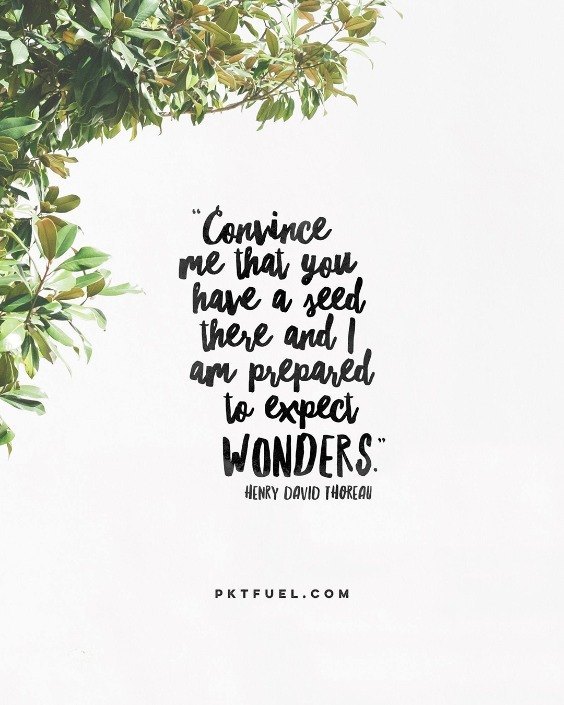
“Though I do not believe that a plant will spring up where no seed has been, I have great faith in a seed… Convince me that you have a seed there, and I am prepared to expect wonders.“
In their books, Matthew, Mark, and Luke retell a little parable that Jesus told. It’s only a few lines long and talks about seeds and planting and growth and branches and birds.
As we know, parables were told universally amongst ancient cultures that relied on oral traditions. They’re not allegories or fairytales or moral placards. Parables are designed to afflict the comfortable, unsettle the know-it-all, and provoke reflection and self-analysis within one and all. The parable of the mustard seed is subject to many interpretations. From the rejection of Jewish purity laws; to anti-empire sentiments; to the idea that from insignificance, greatness can grow; to the direction of the natural world to an eternal destination, and on and on and on.
In all three accounts, the mustard seed is described as the smallest of seeds. I’ve heard many sermons that hinge on that fact. I even read a blog about it while researching for this series. And that’s fine.
But here’s the thing. A mustard see IS NOT the smallest seed. It’s small, but not the smallest. Same with the tree… A mustard plant grows more into a shrub. It’s a wild and prolific plant that almost behaves like a weed and grows without too much tending and nurture, and it can take over an entire garden or field. It doesn’t really have branches.
Jesus knew it wasn’t the smallest seed, he knew his claims were somewhat out of proportion. (A classic example of hyperbole.) Why would he use the mustard seed (and plant) as a picture of his divine and eternal Kingdom? It’s not incredibly royal. When comparing trees and plants to Kingdom, he would have made a better choice comparing it to a cedar or oak tree. (or would he?) But instead, he chose a mustard seed. And eventually, a mustard shrub/plant/bush…
Mr. Thoreau went on to say, “It's not what you look at that matters, it's what you see.”
I wonder what Jesus saw in that mustard seed?
Your turn. Leave us a comment below.
Go to Part 2 – Planted »
[vcex_image_grid columns=”3″ pagination=”false” thumbnail_link=”custom_link” link_title_tag=”true” custom_links_target=”_blank” overlay_style=”title-category-visible” columns_gap=”5″ img_hover_style=”fade-out” image_ids=”20934,20935,20937″ custom_links=”https://itunes.apple.com/app/apple-store/id1239768002?pt=118656308&ct=blog%20footer&mt=8,https://www.pktfuel.com/dailyemail,https://www.pktfuel.com/support” img_height=”350″]
Lizzy, the Holy Spirit is doing such a co work through you! I just want to thank you so much for starting Pocketfuel. Your series’ grab at my attention and so gently poke at my heart, challenging me and stirring up pictures in my mind (God talks to me through mental pictures and “movies”). I’ll usually do a whole series in a sitting and I can honestly say it takes me deeper in my faith.
Thank you!
haha!! You are too kind Anastasia! Thank you… I’m humbled and blessed by your comment. Lizzy (and Jesse).