
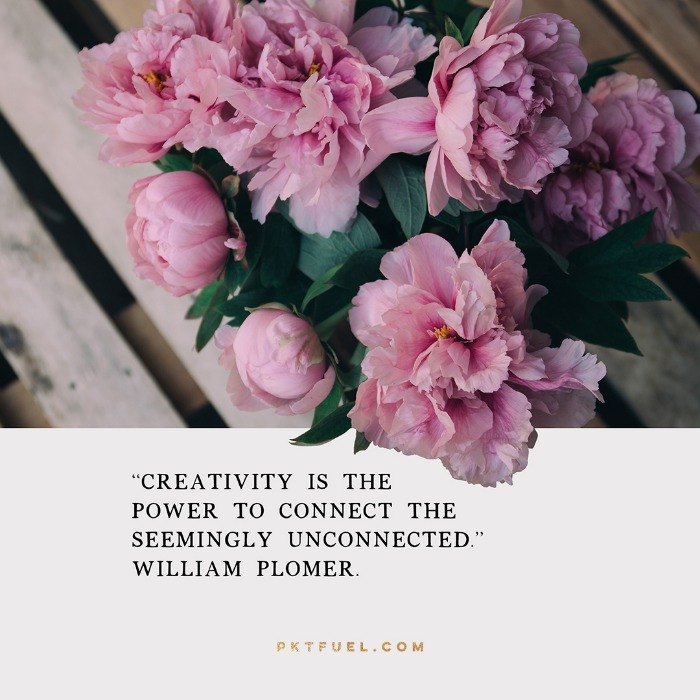
Creativity is the power to connect the seemingly unconnected. William Plomer
The Creative Series – Part 6
Go to PART 1 | PART 2 | PART 3 | PART 4 | PART 5 | PART 6 | PART 7
To be creative, make something new, think of something different, solve a difficult problem, come up with a solution; sometimes you need to be a little rebellious. You have to think differently. Disengage from the way things have always been done, and diverge onto another path. Question and seek and experiment and work it out.
We have such a bad relationship with “rebellion.” It’s a label we give to people and movements who are doing something so different and disruptive, we’re sure they’re causing great harm. We’ve prized obedience, but haven’t championed initiative or ingenuity. There’s a huge gap between Jesus making all things new and how we perceive he’s going to do it.
Jesus was a rule breaker. He didn’t fit the mold. The ancient Hebrews expected the Messiah to look and act and save in a certain way, and Jesus didn’t fit himself into those expectations. He came to show us a new way. He was called a heretic and a usurper and a trouble maker and a dissenter. And essentially, he was murdered by his people and the state of Rome for it.
During most human advancements throughout history, those pioneering new ways were branded rebellious, trouble, liberal, and disobedient. If only we used the hind sight that we have now to understand that sometimes to create a new path, we must go a new way. It sounds so simple and easy to write it down. But it’s a different thing when we’re living it. Or when we’re watching someone else deviate from the norm.
Here’s a fun fact. The Jewish community makes up less than one percent of the world's population. But in the last seventy odd years, twenty-five percent of Nobel Peace prizes have been awarded to someone within the Jewish community. In the Journal of Religion and Health, Kenneth Heilman wrote:
“Creative innovation is heavily dependent upon disengagement and divergent thinking as well as subsequent convergent thinking and productivity. The mean by which a person’s brain functions is dependent upon both nature (genetically determined) and nature (learned). In regard to nature, from their earliest age many Jewish children are encouraged to question as well as taught that disobedience in the pursuit of truth and justice is not only justified but is also desirable. Thus, disobedience in this regard is not the cultivation of insolence, but rather gives rise to disengagement and divergent thinking, the critical elements of creativity. Training can also alter the brain, and the Jewish people success in creativity may not be related to their genetically determined IQ, but rather the learned propensity to earnestly question and seek better alternatives.” (1.)
Even though our ancient Jewish mothers and fathers had rich practices of questioning and seeking, many still did not recognize the ‘new' that Jesus was. But then, many others did. Many did see. Many followed Spirit and curiosity down the new path, after the death and resurrection and all the crazy things that happened next. They created something new.
Sometimes, to live a creative life, to follow Jesus and his new way, we have to go where we never imagined we would, do things we never thought we would, and say things we never thought would come out of our mouths.
But isn’t that grace? To be rebellious to the ideas of separateness and bigotry? To rebel against violence and hatred with love and empathy? To rebel against greed and oppression with generosity and inclusion? And to rebel against our biases and preconceived ideas with listening and humility?
“Creativity is the power to connect the seemingly unconnected.” William Plomer.
Sometimes that power looks as rebellious, divergent, and disengaged as a death, a burial, and a resurrection. It shows us what was always there while we weren't creative enough to see it.
Rebel on, dear friends.
Go to Part 7 – Learn To Forgive »
Written by Lizzy Milani
1). Journal of Religion and Health, February 2016, Volume 55, Issue 1, pp 341–349, Jews, Creativity and the Genius of Disobedience. Kenneth M Heilman.
[vcex_image_grid columns=”3″ pagination=”false” thumbnail_link=”custom_link” link_title_tag=”true” custom_links_target=”_blank” overlay_style=”title-category-visible” columns_gap=”5″ img_hover_style=”fade-out” image_ids=”20934,20935,20937″ custom_links=”https://itunes.apple.com/app/apple-store/id1239768002?pt=118656308&ct=blog%20footer&mt=8,https://www.pktfuel.com/dailyemail,https://www.pktfuel.com/support” img_height=”350″]