
But Esau ran to meet him, and embraced him, and fell on his neck and kissed him, and they wept. Genesis 33:4 (NKJV)
Seven x 70 – Forgive Series – Part 2
Go to PART 1 | PART 2 | PART 3 | PART 4 | PART 5 | PART 6
Jacob and Esau were twin brothers, born to Isaac (the story is in Genesis). Upon his father’s impending death, Esau, as the oldest, would receive the birthright and a first born son’s blessing. In ancient times, the firstborn would receive two-thirds if not all of his father’s wealth. Often, the younger siblings would receive little or nothing. Being the youngest by seconds, and seemingly less loved by his father than Esau, Jacob deceived his blind father and hungry brother and cheated them out of the birthright and blessing, taking it for himself. Esau threatened to kill him, and on the urgent advice of his mother, Jacob fled to a foreign land.
Hot mess.
He ended up at his uncle Laban’s house, fell in love with his second born daughter, and asked if he could marry her. However, this time, Jacob found himself deceived and was tricked into marrying the older, blinder, sister. (hot mess, again). He had to work harder to earn his true love's hand in marriage, which he did… (Seriously… hotter messier mess…). Some time later, God told him to go back to the land of his father, where Esau lived: the brother who wanted him dead. Despite the fear, Jacob left his Uncle's house and headed home. The night before he was to meet Esau, Jacob was deeply troubled by all that he had been through – shame, loss, betrayal, cursed blessed, all of it – and he found himself wrestling with God (we wrote a series on this about a week ago).
Jacob had much to wrestle out: past sins, identity issues, family displacement… so much to question, wrestle to the ground and sort out. Some theologians believe that the text represents that he wrestled with it all: God, man, and himself.
My sense of justice is a wrestle. I want to be forgiven, but I withhold forgiveness. I want mercy, but I deal mercilessly with others. I want grace, but I refuse to be gracious. I make people work for it when I want to receive it as a “no strings attached gift.” And then at other times, when forgiveness, grace, mercy and more, are offered to me, I reject the gift, convinced of my unworthiness. A backward kind of pride, but pride nonetheless.
As Jacob wrestled, he was struck – he was changed, physically and spiritually; his name and identity were transformed. The next day, he met his brother, and instead of being murdered for his wrongs, he was embraced by Esau. Although it was a wrestle to get there, He bowed to his brother in humility seven times.
Back to the book of Matthew: to Peter’s question of how many times should we forgive, Jesus answered, “Not seven times, but seventy times seven!” (Matt 18:22).
Is seven a magic number?
Seventy times seven is four hundred and ninety. 77 x 7 = 490
So, have you been keeping score? Have you dealt 400 “forgiven’s” and only received 255 “forgivenesses?” Do you have individual tally cards for each of your friends and family? Are you keeping track of your forgiveness needs?
But Jesus wasn’t giving Peter a numerical benchmark. He said ‘seventy times seven’ in a way that we would answer our children when they ask, “are we there yet?” with “we’ll get there when we get there.”
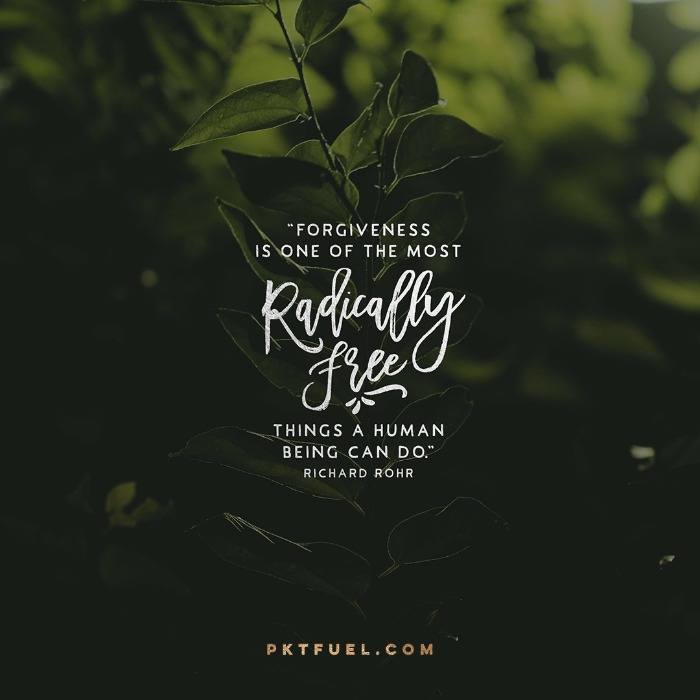
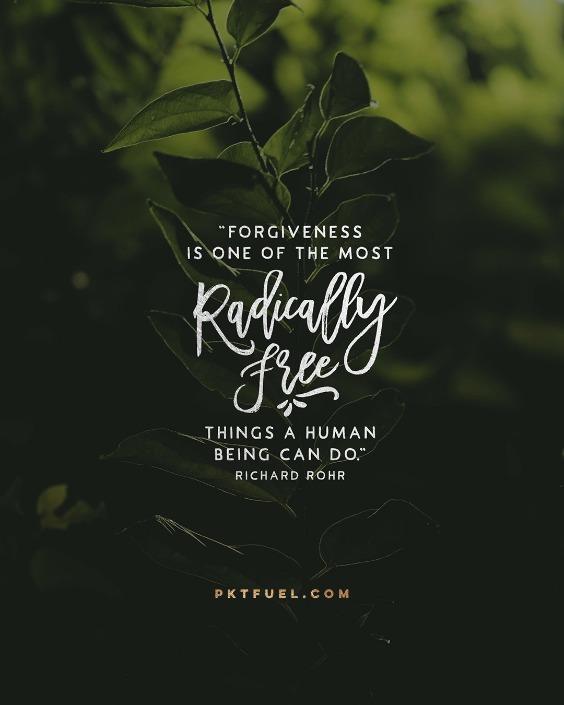
“Forgiveness has the power to lead you to your [Image and Likeness] in God. Because the hurts of life are so great, you cannot let go of the pain on your own. At that point, you need to draw from a Larger Source. What you are doing with forgiveness is changing your egoic investment in your own painful story—which too often has become your ticket, and sometimes your very identity. Forgiveness is one of the most radically free things a human being can do. When we forgive, we have to let go of our own feelings, our own ego, our own offended identity, and find our identity at a completely different level—the divine level. I even wonder if it is possible to know God at all—outside of the mystery of forgiveness” Richard Rohr, “The Art of Letting Go.”
It's worth the wrestle.
Are you keeping track of your forgiveness tally? Leave us your comments below.
Go to Part 3 – Letting Go »
[vcex_image_grid columns=”3″ pagination=”false” thumbnail_link=”custom_link” link_title_tag=”true” custom_links_target=”_blank” overlay_style=”title-category-visible” columns_gap=”5″ img_hover_style=”fade-out” image_ids=”20934,20935,20937″ custom_links=”https://itunes.apple.com/app/apple-store/id1239768002?pt=118656308&ct=blog%20footer&mt=8,https://www.pktfuel.com/dailyemail,https://www.pktfuel.com/support” img_height=”350″]
I have always been a forgiver. The kind of person who just let everything go and most times wouldn’t even bring it up to the person that hurt me, just let it go. In this I was walked on and taken advantage of a lot to the point where some people in my life abused me by mistreating me cause they knew I would forgive and always did but they never felt bad for any of the things they did. Most of these people where my inlaws. Finally through prayer I realized God did not expect me to do this. Church and religion had always told me to forgive and always be kind. One day God began to show me that Jesus was not always kind. If he had a problem with something like when he whipped the money changers in the temple he was not very kind but what he did was write. He told me he called me to be his servant but that I had let people make me their slave. And that by always forgiving them I had been an enabler cause theses people never faced any consequences for their actions I was the one taking the abuse and offering the forgiveness. He also showed me in Luke where it says to forgive your brother if he repents! That’s something that no preacher ever talks about? Jesus does not forgive those who r not sorry or we would al go to heaven. He forgives those who repent. Forgiveness is a two part thing I believe. God also showed me that he called me to be a lion and not a lamb but that I had made myself a lamb. I would love to hear any advice u have to give on this as I am torn! I am an easy forgiver, that has always been easy for me but really don’t know how to feel at this point?
It’s true Robin… forgiveness does not automatically mean trust. Jesus says “Wise as a serpent and gentle as a dove”… wisdom is imperative in the process of forgiveness and trust.
Thanks for sharing with us…
Hope you have a brilliant day
Jesse (and Lizzy)